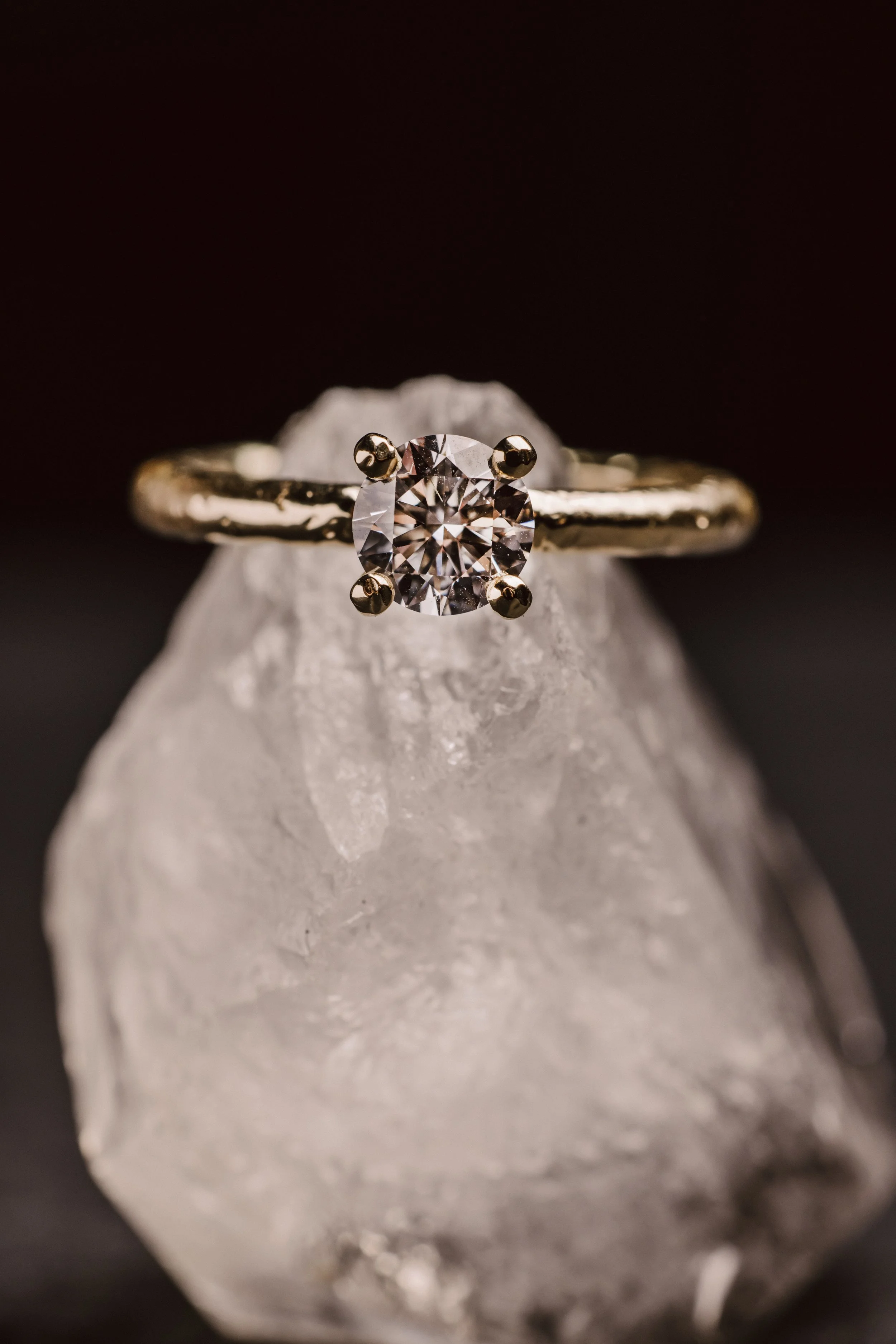
Natural and lab-grown diamonds are both real diamonds, and they form in different ways. When you’re choosing a stone, you might be drawn to how it looks, the story of how it formed or what’s possible within your budget. We work with both at Katie g. and are happy to talk through what matters to you as you choose.
What they have in common
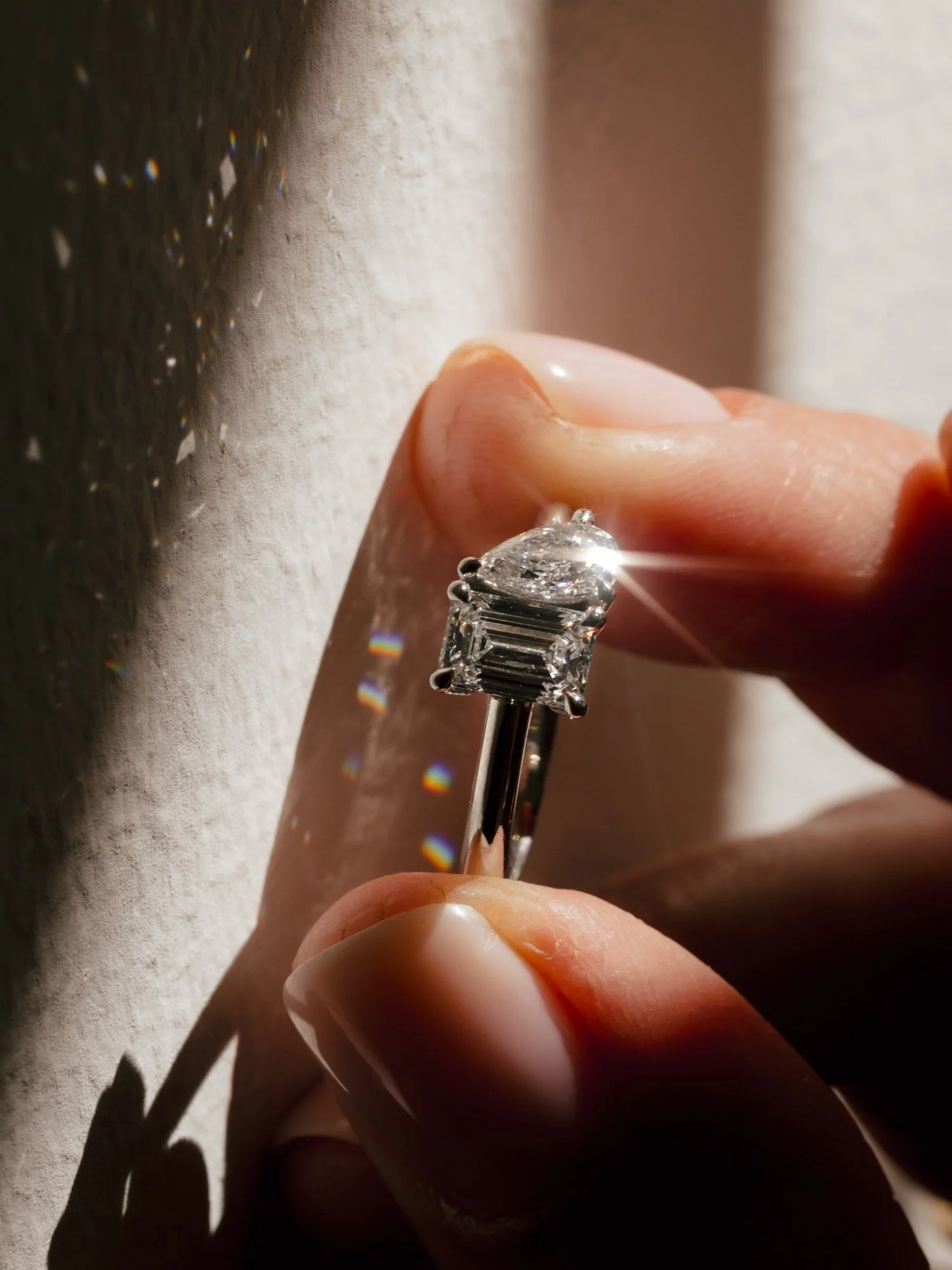
Both natural and lab-grown diamonds are crystalline carbon, with the same diamond structure and the same exceptional hardness. Once cut and polished, they can look exactly the same and be equally beautiful. Their origin cannot reliably be judged by eye.
Both are cut and polished using the same skills. The same four qualities matter for either: colour, clarity, cut and carat weight (how much the diamond weighs). These are the four Cs, which help describe an individual diamond alongside what you see.
Moissanite and cubic zirconia, on the other hand, are different materials altogether. They may resemble diamonds, but they are lookalikes rather than diamonds. A lab-grown diamond is a real diamond grown in a laboratory.
Natural and lab-grown diamonds can be worn and cared for in the same way. A well-made setting and regular checks help keep either one secure.
Where the difference begins
Natural diamonds formed deep within the Earth millions to billions of years ago, under extraordinary heat and pressure. Rare volcanic eruptions later carried them towards the surface. A small piece of that ancient history, made by the Earth and now worn on your finger: for many people, that is what makes a natural diamond so special.
Lab-grown diamonds have a different origin story, with the same beauty and exceptional hardness. They grow over days to weeks, depending on the method, size and quality. One method uses high pressure and heat; another builds diamond from a carbon-containing gas. Both create real diamond.
You cannot reliably tell natural and lab-grown diamonds apart with the naked eye. Their different growth histories leave extremely subtle characteristics that specialist laboratories can identify with suitable equipment. The distinction lies in their origin, rather than a visible difference in beauty.
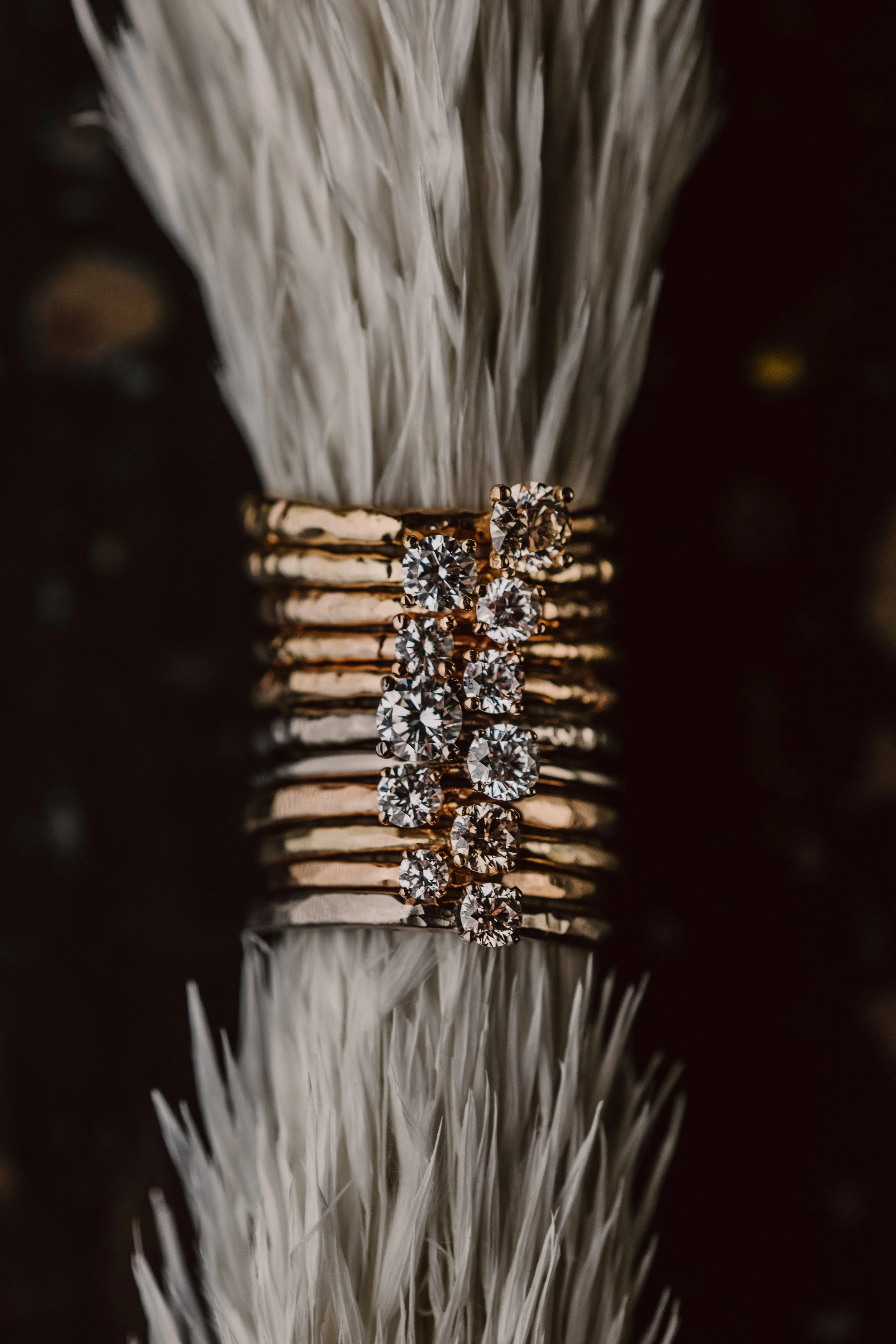
Natural or lab-grown, the sparkle is the same.
Origin doesn’t determine beauty
A natural diamond is not automatically more beautiful than a lab-grown one, or the other way round. Both come in different colours, clarities, shapes and cuts. The individual stone determines how it catches the light and looks in your ring.
Our guide to choosing a diamond explains these qualities in more detail.
Find the right diamond for your budget
The price difference between natural and lab-grown diamonds can be substantial, particularly as stones get larger. If you’re considering 0.50 carat or above, it is well worth comparing both: a lab-grown diamond can put a larger stone or a higher colour or clarity grade within the same budget.
Whether you’re choosing for yourself or for your partner, the wearer’s preferences come first. Have they expressed a wish for a natural or lab-grown diamond, or mentioned a shape or size they love? Those wishes help guide the choice alongside your budget.
Share a budget you feel comfortable with, and we’ll suggest suitable stones and designs. We’ll then prepare a non-binding quote, so you can consider the ring in your own time, with no obligation.
Understanding your diamond’s quality
For diamonds of around 0.30–0.35 carat and above, you can usually expect an individual laboratory report. It describes the diamond’s quality through the four Cs: carat weight is how much the diamond weighs; cut is how well it has been shaped and polished to reflect light; colour describes its colour or how colourless it is; and clarity describes the small features within the stone and on its surface. These same qualities matter for both natural and lab-grown diamonds.
With comparable colour, clarity, weight and cut, a natural and a lab-grown diamond can look alike. Origin doesn’t add a visible mark of quality. Even diamonds with matching grades can have their own character, so we help you understand both the report and the stone itself.
We’ll explain the report supplied with your chosen diamond.
How we source our diamonds
For our lab-grown diamonds, we work with a trusted partner within the EU, a relationship we’ve built over many years. We choose carbon-neutral sourcing from production to delivery at our Vienna atelier, with remaining emissions offset.
For natural diamonds, we work with trusted local diamond dealers we’ve known for years, whose sourcing follows the Kimberley Process for rough diamonds. We’re happy to explain the information available for your chosen stone. Our Made with care page has more about our approach, including reusing a diamond you already own.

Let’s talk diamonds
Natural or lab-grown? Come to our Vienna atelier to compare stones and talk through what matters to you. If you have questions before visiting, get in touch—we’re happy to help.